Reading the Crate: The Estate Sale Pros Who See Treasure in Tangled Cords
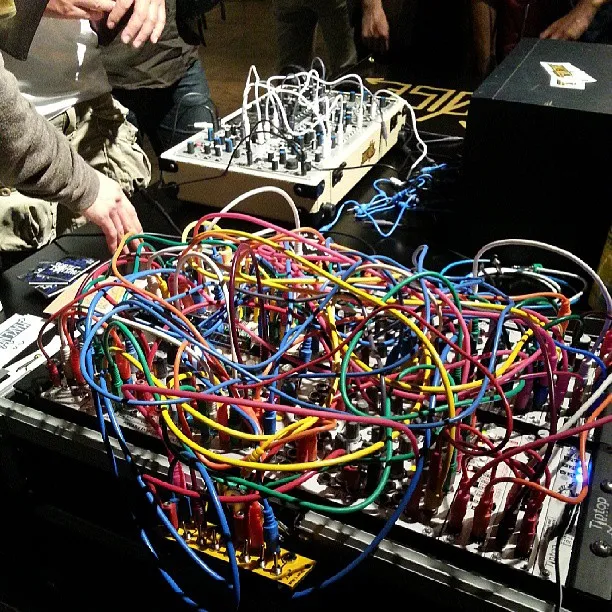
Photo: Kazuhisa OTSUBO, CC BY 2.0, via Wikimedia Commons
The guy in the fleece vest didn't even slow down.
The rest of us were elbowing through a Saturday estate sale in a Columbus subdivision — the kind where the dead guy's kids priced everything with blue painter's tape and a Sharpie — when he walked past a milk crate overflowing with power cords, RCA cables, and a nest of wall warts, and said, quietly, to no one: "There's at least sixty bucks in that."
Then he bought the crate. The whole crate. Eight dollars.
This is the moment where most people assume garage sale picking is luck. It isn't. What the fleece vest guy was doing was reading — fluently, instantly, the way you read a sentence without sounding out the letters. And once you understand what he was actually looking at, the whole subculture of estate sale pickers starts to make a different kind of sense.
The Crate Is a Text
Ask a picker what they see when they look at a box of cables and they'll give you an answer that sounds a little unhinged until it doesn't.
"A crate like that tells you about the house," says Dana, a picker who works estate sales across Ohio and Indiana most weekends. "RCA cables everywhere means somebody hooked up AV equipment — maybe a camcorder era, maybe a home theater guy. If I see a GameCube composite in there, I'm thinking the entertainment center upstairs wasn't touched since 2004. That's where the good stuff lives."
The crate isn't the treasure. The crate is a map. Tangled cords are sediment — layers of the household's tech history, compressed. Pickers read the strata.
The Tells: Stickers, Screws, and Residue
So what are the actual signals? Talk to enough pickers and a vocabulary emerges — a literacy of small physical details that most of us walk past every day.
Sticker residue. A price gun sticker half-scraped off a cartridge or a console shell doesn't just mean the item was resold before. Regional price stickers are a dating system. A yellow tag from a defunct Ohio flea market chain tells a picker roughly when and where the item last changed hands. "Stickers are receipts," Dana says. "Somebody already vetted this and priced it for their market. If that market was 1997, I'm interested."
Screw patterns. Flip over a console or a piece of electronics and the screws talk. Tri-wing and GameBits mean Nintendo, obviously — but a picker is looking at whether the screws look untouched. Stripped heads suggest the case has been opened, possibly by someone with more confidence than skill. Pristine, never-torqued screws on a sealed-era device? That's the good kind of untouched.
Cable hierarchy. This one's subtle. A crate with a genuine OEM power supply sitting next to a pile of generics means somebody kept the good brick and ditched the junk — or vice versa. Third-party adapters with certain vintage molds are collectible in their own right now. The ratio of official to off-brand is a fingerprint of the household: careful owner or cable-drawer chaos agent.
The dust gradient. Items at the bottom of a box have been there longest. Pickers dig to the bottom on principle. "Top of the crate is what the family thought was valuable," one picker told me. "Bottom of the crate is what they didn't recognize. I want what they didn't recognize."
Pattern Recognition as a Business Model
Here's the part that surprises people: for a lot of these pickers, this isn't a hobby with a side hustle attached. It's a full literacy deployed full-time.
The economics are blunt. Buy the unsorted crate for ten bucks, spend an evening sorting, list the winners individually. A working OEM N64 power supply, a legit Nintendo-brand controller, a bag of period-correct AV cables — the math stacks up fast. The crate in Columbus was, by the picker's own estimate, a 7x return before he'd even unloaded the trunk.
But the real asset isn't the inventory. It's the speed. The amateur at the sale is still reading the handwritten sign that says "CABLES $1 EA." The picker has already scanned, priced, and committed. In the garage sale economy, seconds are the currency, and literacy is how you earn them.
You Can Learn It, Too
The encouraging part of this whole story is that nobody was born knowing what a tri-wing screw looks like. Every picker I talked to described the same origin arc: a few embarrassing early purchases, a slow accumulation of reference knowledge, and then — one day — the flip. The crate stops being junk and starts being a sentence you can read.
It starts small. Learn what an OEM power brick looks like versus a generic. Notice which price stickers are old and which are fresh. Flip things over. Check the screws. Dig to the bottom of the box, always.
Because the estate sale was never really hiding anything. The information was on the surface the whole time — printed in residue and screw heads and the order of the strata. Most of us just never learned the alphabet.
The pickers did. And every Saturday morning across America, they're out there, reading the crate.