Up Up Down Down: Why Gen-Z Is Treating Cheat Codes Like Sacred Texts
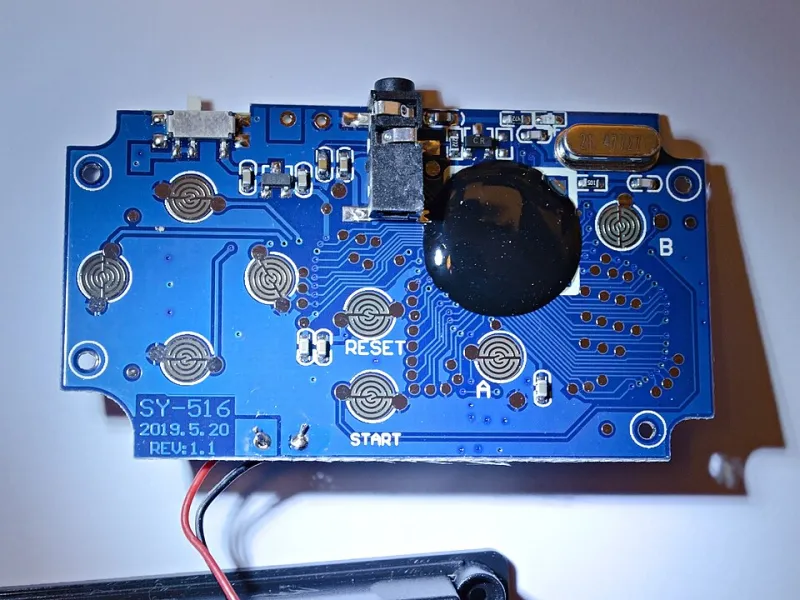
Photo: Multicherry, CC BY-SA 4.0, via Wikimedia Commons
Ask a 22-year-old about the Konami Code and watch their face. There's a solid chance they know it — not because they grew up punching it into a NES controller, but because they learned it from a TikTok, a Discord server, or a corner of Reddit where people catalog retro game secrets like they're preserving ancient manuscripts.
Something strange is happening in gaming culture right now, and it's way more interesting than another discourse cycle about remasters or subscription services. Gen-Z is going back — not out of pure nostalgia, because most of them didn't live through the original era — but out of something closer to curiosity about a buried world. And they're bringing the internet's full collaborative energy with them.
The Cheat Code as Cultural Artifact
Let's be honest about what cheat codes actually were back in the day. They weren't just shortcuts. They were currency.
In the pre-internet era, knowing a cheat code meant either owning the right issue of Nintendo Power, having a friend with an older sibling, or possessing some mysterious personal connection to the sacred knowledge. You couldn't Google it. You couldn't watch a YouTube video. The information was scarce, and scarcity made it valuable.
That system is long gone — but here's the twist. Gen-Z, a generation that has lived its entire life inside information abundance, is recreating that scarcity on purpose.
On TikTok, creators who post obscure cheat codes and undocumented game mechanics rack up views that make no logical sense unless you understand what's actually being sold. It's not the code itself — you can find that in thirty seconds on GameFAQs. It's the ritual of discovery. The performance of being the person who knows. The comment section fills up with people saying they had no idea, asking follow-up questions, sharing adjacent secrets. It becomes a living thread of collective knowledge-building.
That's not nostalgia. That's something newer and more interesting.
ROM Hacking as Digital Archaeology
If TikTok is the front door of this subculture, ROM hacking is the basement — and it goes deep.
For the uninitiated: ROM hacking involves modifying the code of classic game files to change, add, or reveal content. Some hackers use it to create full fan-made sequels. Others use it to dig into the raw data of a game and find things the developers never intended players to see — cut levels, unused enemy models, scrapped dialogue, and sometimes genuinely unsettling content that was stripped before launch.
The Pokémon series is basically a university-level curriculum in this stuff. The original Red and Blue games are riddled with leftover data, glitched encounters, and the infamous MissingNo — a corrupted entity that the community has been analyzing for nearly three decades. Newer players are discovering it fresh, and Discord servers dedicated to Pokémon data-mining have thousands of active members who treat each discovery like a breakthrough in a long-running investigation.
One 19-year-old user in a retro gaming Discord — who goes by the handle Latchkey64 — described their introduction to ROM hacking like this: "I found a YouTube video about cut content in Ocarina of Time and just fell into it for like six hours. It felt like finding out your house has a secret room. The game you thought you knew completely wasn't the whole game."
That feeling — the floor dropping out beneath a familiar thing — is exactly what this subculture is selling.
Discord Is the New Nintendo Power
The infrastructure for this revival is almost entirely Discord-based, and the parallels to the old print magazine ecosystem are genuinely striking.
Nintendo Power worked because it centralized knowledge and gave it a sense of authority. A code printed in that magazine felt official, even when it wasn't. Discord servers dedicated to specific games or consoles function the same way. There's a hierarchy — longtime members, moderators with deep expertise, newcomers who get hazed with beginner questions before earning access to the premium channels. The knowledge feels earned because you had to find the server first, then prove you belonged.
Some of the most active retro gaming servers have strict verification processes. You have to answer questions about game history, demonstrate familiarity with emulation tools, or get vouched for by an existing member. That's not gatekeeping in the pejorative sense — it's community architecture designed to protect the quality and density of the knowledge inside.
And the knowledge inside is wild. Servers dedicated to SNES games have documented button combinations that unlock developer test modes, frame-perfect inputs that trigger behaviors nobody fully understands, and entire threads devoted to single screens in games that have been analyzed for inconsistencies for years.
The Rebellion Angle Nobody Talks About
Here's a layer of this trend that doesn't get enough attention: for a lot of younger players, engaging with retro cheat codes and emulation culture is explicitly anti-establishment.
Modern AAA gaming has essentially monetized the cheat code. Unlockable characters that used to require a secret button combination now cost $15 in a battle pass. Cosmetics that would've been hidden rewards are sold in storefronts. The idea that you could earn something secret through skill, knowledge, or persistence has been systematically replaced by the idea that you can buy it.
Going back to the era of the cheat code is, for some younger players, a direct rejection of that model. It's saying: there was a time when secrets were free, and finding them meant something, and we want that back — or at least we want to understand what it felt like.
Emulation culture fits neatly into this. Playing a ROM on a PC or phone isn't just convenient — for many Gen-Z players, it's a philosophical statement about ownership, access, and the idea that games are cultural artifacts that belong to everyone, not licenses that corporations can revoke whenever they want.
What Comes Next
The 64 in our name isn't accidental. That era of gaming — cartridge-based, code-dependent, built on secrets passed person to person — is the spiritual ancestor of everything this site is about. Decoding. Digging. Finding what's underneath.
Gen-Z didn't live through the N64 era, but they're inheriting its ethos. And they're applying it to everything: not just retro games, but modern ones too. The skills you build analyzing a glitch in a 1998 platformer translate directly to cracking an ARG in a 2024 release. The mindset is the same.
Cheat codes were never just about getting infinite lives. They were proof that the game had layers — that there was more underneath if you knew where to push.
That's still true. It always will be.
Level up. Decode everything.