If You Don't Know the Words, You Can't Play: The Hidden Linguistics of Speedrunning
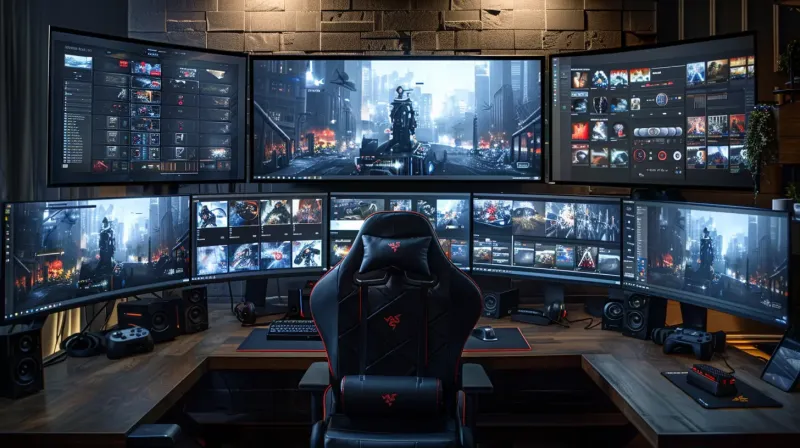
Photo: speedrunner gaming setup multiple monitors timer, via www.winorm.com
There's a moment every newcomer to speedrunning hits where the footage stops making sense. Not the movement — you can see someone clipping through a wall or skipping a boss cutscene and roughly understand something happened. It's the chat. The Discord thread. The runner's own commentary. Suddenly you're reading sentences made entirely of English words that still somehow mean nothing to you.
"Got a wrong warp into the back half but fumbled the BLJ setup, reset after the menuing cost me the IL pace."
Congratulations. You've just encountered a speedrunning dialect — and you are very much an outsider.
More Than Jargon
Every hobby has its shorthand. Golfers talk about handicaps. Skaters argue about grinds. But what speedrunning communities have built goes beyond the casual vocabulary of a shared interest. These are functional linguistic systems — compressed, precise, and deliberately layered — that serve the same social purpose as any dialect: they mark who belongs and who doesn't.
Linguists call this kind of in-group speech a cant or argot, terms historically associated with trade guilds and criminal underworlds. The parallel isn't as dramatic as it sounds. Both contexts involve groups of people who need to communicate efficiently about specialized activities while simultaneously signaling membership to each other. Speedrunning communities, it turns out, are doing exactly that — just with Super Mario 64 instead of 16th-century London pickpockets.
The vocabulary didn't appear fully formed. It evolved through years of forum posts, Twitch streams, and collaborative documentation as runners needed faster ways to describe increasingly technical discoveries. What started as convenient shorthand calcified into something more rigid: a test of authenticity.
Zelda Runners and the Grammar of Glitches
The Legend of Zelda speedrunning scene — particularly Ocarina of Time — is one of the oldest and most linguistically elaborate communities in the space. A runner who's been around for more than a week knows what "SRM" means (Stale Reference Manipulation, a memory exploit that lets runners rewrite game data mid-run). They know "ACE" (Arbitrary Code Execution, which is essentially programming the game in real time using controller inputs). They know the difference between "any%" and "all dungeons" and why conflating them in a serious conversation will get you corrected immediately.
But it goes deeper than acronyms. OoT runners have developed notation systems for routing — shorthand maps of decision trees that experienced runners can read like sheet music. There are named sequences of inputs called "strats" that reference the runner who discovered them or the stream moment that made them famous. "Reverse Bottle Adventure" isn't a description of what happens — it's a name, a proper noun, and using it correctly signals that you understand the lineage of the discovery.
This is where the linguistic gatekeeping gets interesting. It's not just about knowing terms. It's about knowing stories. The OoT community's vocabulary is partially an oral history of its own technical evolution.
Mario's Acronym Economy
Over in the Super Mario 64 scene, the dialect runs on acronyms and abbreviation stacks that can make a single sentence nearly impenetrable. "BLJ" (Backwards Long Jump) is probably the most famous speedrunning term in mainstream culture at this point — even non-runners have seen the meme. But that's the surface.
SM64 runners talk about "0-star," "1-star," and "16-star" categories the way sports fans talk about divisions. They reference "parallel universes" — a real technical phenomenon involving the game's floating-point math — with complete seriousness, because in context, it is serious. The community has its own tier lists of "strats" ranked by difficulty and consistency, its own meta that shifts when someone discovers a new trick, and its own hall of fame of world record holders whose names are spoken with the kind of reverence usually reserved for athletes.
What's striking is how the vocabulary enforces a kind of meritocracy. You can't fake fluency here. Drop the wrong term or misuse a category name and the correction comes fast. The language functions as a continuous, low-stakes entrance exam.
Souls Runners: When the Game's Own Lore Becomes the Dialect
FromSoftware's games — Dark Souls, Elden Ring, Bloodborne — add another layer because the source material is already cryptic. The games themselves communicate through obscurity, which means the speedrunning community built their dialect on top of an existing one.
Souls runners have their standard technical vocabulary: "wrong warp," "zip glitch," "out of bounds." But they also fold in lore terminology, area names, and item descriptions in ways that blur the line between game knowledge and community knowledge. Knowing that "Morgott skip" refers to a specific sequence break in Elden Ring requires you to know who Morgott is, where he appears in the game's structure, and why skipping him matters for routing. The language rewards people who've played the game, not just studied the runs.
This creates a steeper but more interesting barrier. Souls speedrunning communities tend to be more welcoming to players who are new to running but deep in the lore, because the shared language of the source material gives them a foundation. It's a different kind of membership test — less about technical mastery, more about cultural investment.
The Lock and the Key
Here's what all of this actually reveals: speedrunning communities use language the same way any subculture does — to build walls that are also doors. The terminology isn't designed to exclude people permanently. It's designed to make entry mean something.
When you finally understand what a runner means when they say they "saved and quit" to reset a flag, or why a "deathwarp" is sometimes faster than just running, you've earned something. You've put in the time. The language acknowledged it.
That's not gatekeeping in the purely negative sense — it's authentication. And in a space where anyone can technically watch a run on Twitch, the linguistic barrier is one of the few things that separates a viewer from a member.
Decoding the words isn't the finish line. It's the loading screen.