Grandma, It's a Computer You Plug Into the TV: Ranking Consoles by How Badly You'll Fumble the Explanation
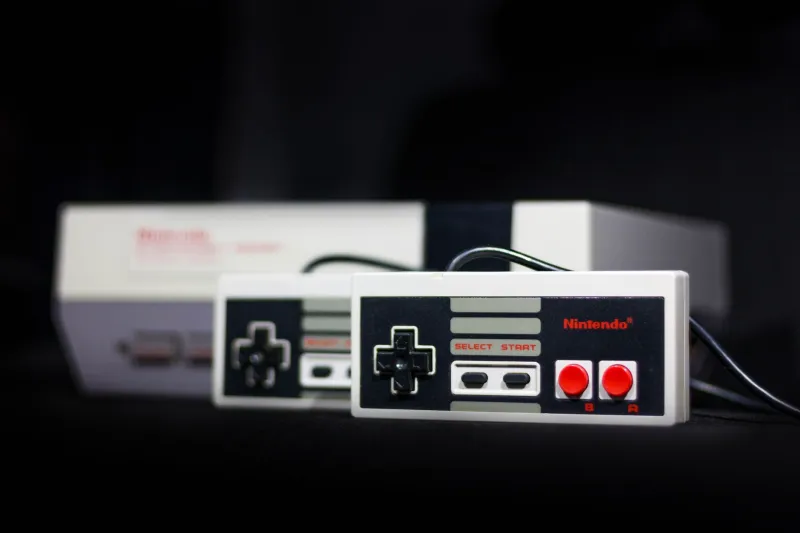
Every gamer has been there. You're home for the holidays, someone spots the console on your shelf, and suddenly you're asked the question that has ended more family dinners than politics: "So what is that, exactly?"
Here's the thing — the difficulty of that answer is basically a measure of the machine's weirdness. The SNES? Easy. The Virtual Boy? You'll be there all night. So we did what any self-respecting site with "64" in its name would do: we ranked 64 consoles by how hard they are to explain to a non-gamer parent, from least to most hopeless. Consider it a sneakily comprehensive tour of 50 years of hardware design — with a difficulty meter attached.
Tier One: The Explainers Explain Themselves (Difficulty: 1–2)
The NES (1985) — "It's the one with Mario." Done. Your parents might even remember the commercials. The NES sold over 60 million units in the US alone, which means statistically, someone in your family has blown into a cartridge.
The Game Boy (1989) — "Like the NES but portable." Batteries not included, and neither was a backlight, but nobody needs to know that to get it.
The Wii (2006) — "You swing this remote-looking thing and it plays tennis." Nintendo's genius here was that the demo was the explanation. Grandmas were bowling by 2007. This is the easiest console in history to explain and possibly the easiest to sell.
The PlayStation 2 (2000) — "The best-selling console ever, it also played DVDs." The DVD player did more heavy lifting for the explanation than Sony ever could have hoped.
Tier Two: You're Going to Need Analogies (Difficulty: 3–5)
The Dreamcast (1999) — "It was Sega's last console and it had online gaming before online gaming was a thing." Now you're explaining dial-up to someone who lived through dial-up but has chosen to forget it.
The Nintendo DS (2004) — "Two screens. The bottom one you touch." Your parent: "Why?" You: "...games." The DS went on to sell over 154 million units, so apparently the "why" didn't matter.
The Sega Saturn (1995) — "It was 2D powerhouse in a world that suddenly wanted 3D, and it launched early and confused retailers." You've now lost them and possibly yourself.
The Wii U (2012) — The great naming disaster. "No, it's not an accessory for the Wii. It's a whole new console. Yes, really." Historians will study this one. Marketing professors already do.
Tier Three: Historical Context Required (Difficulty: 6–7)
The Magnavox Odyssey (1972) — "The first home console. It had no sound, no CPU, and you had to put plastic overlays on your TV screen." You're now describing a board game that lives inside a television, and honestly, that's what it was.
The ColecoVision (1982) — "It was arcade-perfect at home, which was a huge deal in 1982." Requires explaining that arcades used to matter. Bring snacks; this is a longer conversation.
The Atari 5200 (1982) — "Like the 2600 but the controllers didn't center themselves, which was a crime." Your parent has stopped making eye contact.
The Neo Geo (1990) — "It was $649 in 1990 dollars — like $1,500 today — and it played the exact same cartridges as the arcade." Now you're doing currency conversion. Abandon hope.
Tier Four: Bring a Whiteboard (Difficulty: 8–9)
The Virtual Boy (1995) — "It's 3D but red and you hunch over it like you're taking a really sad eye exam." You will demonstrate. The demonstration will make it worse.
The Sega 32X (1994) — "It was an add-on for the Genesis that plugged into the cartridge slot, except there was also the Sega CD, which plugged into the bottom, so the whole stack looked like a..." You've lost them. You've possibly lost yourself. Even Sega's own president reportedly called it a mistake.
The Ouya (2013) — "A Kickstarter console. It was a $99 Android box. It raised $8.5 million and then... went away." Explaining a failed crowdfunding darling to your parents is really just explaining crowdfunding, which nobody has ever successfully done.
The N-Gage (2003) — "A phone that was also a Game Boy, but you held it sideways like a taco to talk on it." The taco thing is real. Look it up. Nokia shipped a gaming phone you had to hold like lunch.
Tier Five: Impossible. Do Not Attempt (Difficulty: 10)
The Steam Deck (2022) — "It's a PC, but handheld, and it runs Linux, but you don't really see that, and your whole Steam library is on it." You have now said "Steam," "library," and "Linux" in one sentence to a person who thinks an OS is a magazine.
The Commodore 64 (1982) — "Okay so it's a computer but everyone used it for games, and it's the best-selling computer of all time, and that's actually where our site's name vibe comes from, and —" Perfect. Now the whole family knows how 64ForSuu got here.
Why This Ranking Actually Matters
Strip away the jokes and there's a real pattern: the consoles that are hardest to explain are almost always the ones that were ahead of their time, behind their time, or chasing a business strategy nobody asked for. The easy-to-explain machines — the NES, the Wii, the PS2 — succeeded precisely because their designers made the value obvious in ten seconds or less.
That's not a trivia fact. That's product design 101, learned the hard way across six decades and 64 machines. The next time a company launches something that takes three paragraphs to justify, remember the 32X. Remember the taco phone.
And the next time your mom asks what that gray box on your shelf is, be grateful the answer is just "Mario."