The Posts That Aren't Posts: How Gen-Z Turned Emojis Into an Underground Signal Network
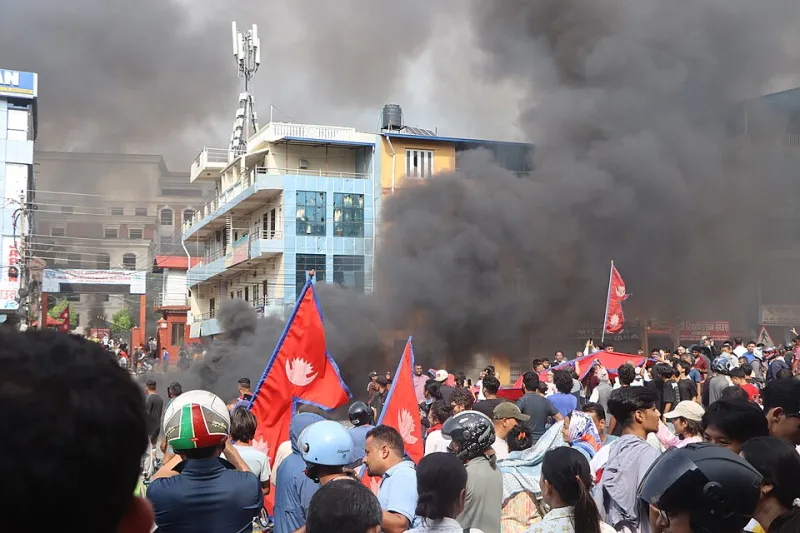
Photo: हिमाल सुवेदी, CC BY-SA 4.0, via Wikimedia Commons
Scroll past it fast enough and it looks like nothing. A handful of emojis. A color gradient in a profile picture. A specific combination of seemingly random symbols in a comment section that's getting a lot of quiet likes and no replies. You keep moving.
But you just walked past a conversation.
Over the last few years — accelerating sharply around 2020 and picking up serious momentum since — young activists in the US and abroad have been developing what amounts to a parallel communication layer inside mainstream social platforms. It runs on emojis, color codes, and visual patterns that look decorative to the uninitiated and to the content moderation algorithms trying to flag organizing activity. To the people who speak it, it's a coordination system, a solidarity signal, and sometimes a lifeline.
Why the Code Exists
The short answer is: because the platforms made it necessary.
Content moderation on TikTok, Instagram, and even Discord has become sophisticated enough that explicit protest language — hashtags, direct calls to action, specific political keywords — can get posts suppressed, accounts flagged, or content quietly buried in a process creators call "shadowbanning." Whether or not platforms are deliberately targeting activist content is a debate that's been running for years. What's not debatable is that users believe they are, and have adapted accordingly.
The result is a generation that learned to communicate politically the way people have always communicated under surveillance: obliquely, visually, and with plausible deniability baked in.
"If I post a green heart and a watermelon, that's just me liking fruit," one digital activist who asked to remain anonymous told us. "The algorithm can't prove otherwise. But everyone who needs to know, knows."
Decoding the Visual Dictionary
Some of these symbols have documented histories. The watermelon emoji — green outside, red inside, with black seeds — became widely recognized as a symbol of Palestinian solidarity in 2023, partly because it mirrors the colors of the Palestinian flag and partly because it was one of the few images that could be posted without triggering immediate content removal. It spread fast. By the time platforms caught up to its meaning, it was everywhere.
The green heart operates similarly in certain spaces — a quiet nod of solidarity across communities where explicit statement-making feels unsafe or algorithmically risky. Context matters enormously here. A green heart under a climate post means something different than a green heart in a comment thread about Gaza, which means something different again in spaces where it signals general left-alignment.
That ambiguity is the point. These aren't fixed symbols with dictionary definitions. They're contextual signals that derive meaning from placement, combination, and community. Which means you can only read them if you're already inside the conversation.
The Gradient Game
Profile picture color gradients — the kind where someone shifts their avatar to include specific color combinations — became a major solidarity signal particularly on Instagram and Twitter/X. During various protest moments over the past few years, coordinated gradient shifts have functioned as the digital equivalent of wearing a specific color to a rally. You're not saying anything. You're showing something, to people who know what to look for.
This visual layer is almost entirely invisible to automated moderation because there's no text to parse. A pink-and-blue gradient might be aesthetic. It might be a trans rights signal. It might be both. The ambiguity isn't a bug — it's the entire architecture of the system.
Discord communities have taken this further, using profile picture combinations, specific emoji reactions (rather than words) in response to posts, and even the timing of reactions as a kind of Morse code for sentiment. React with a specific emoji within a specific window and you're voting yes on something. Use a different one and you're flagging concern. It looks like normal Discord chaos from the outside.
TikTok and the Sound Layer
On TikTok, the code gets even more layered because audio is part of the equation. Specific sounds and songs have become associated with specific movements or sentiments — not through any official designation, but through accumulated use. Post a video with a certain trending audio track and you're tagging it into a conversation that the text content of your video might not mention at all.
This is partly why TikTok's moderation challenges are different from Instagram's. Moderating image content is one problem. Moderating the cultural meaning of a specific audio clip used in a specific context is a much harder problem — one that requires the kind of contextual cultural knowledge that automated systems don't have and human moderators can't scale.
Young activists know this. The sophistication with which Gen-Z users understand platform mechanics — not just emotionally but technically — is genuinely striking. These are people who grew up watching algorithms shape their feeds and learned to think about content moderation the way a previous generation thought about network TV censorship: as a constraint to route around.
The Risk of Being Too Readable
There's a tension inside all of this that's worth naming. The more effective a symbol becomes, the more visible it gets — and the faster it gets absorbed, co-opted, or suppressed. The watermelon emoji went from quiet signal to global news story in a matter of months. Once a symbol is famous, its power as covert communication is significantly diminished.
This creates a kind of arms race. Communities develop new signals as old ones get absorbed into mainstream awareness. The language stays alive by staying ahead of its own legibility.
Some activists see this as exhausting. Others see it as evidence that the system is working — that the language is dynamic enough to keep evolving, that it can't be frozen and catalogued by anyone outside the communities generating it.
"You can't screenshot the whole dictionary if we keep writing new pages," one organizer put it.
What It Means to Be Fluent
There's something almost poetic about the fact that the most politically engaged generation in recent memory is communicating its politics through symbols that look, to the untrained eye, like decoration. Like noise. Like nothing.
But that's always been how coded language works. It hides in the gaps between what watchers are looking for and what's actually being said. It rewards the people who paid attention long enough to learn the vocabulary.
If you've been scrolling past the watermelons and the green hearts and the gradient profile pictures without a second thought — you've been walking through a conversation you didn't know was happening.
Now you know where to look.