Trust Me, I Have a Role Color: How Discord Became the New Flea Market Table
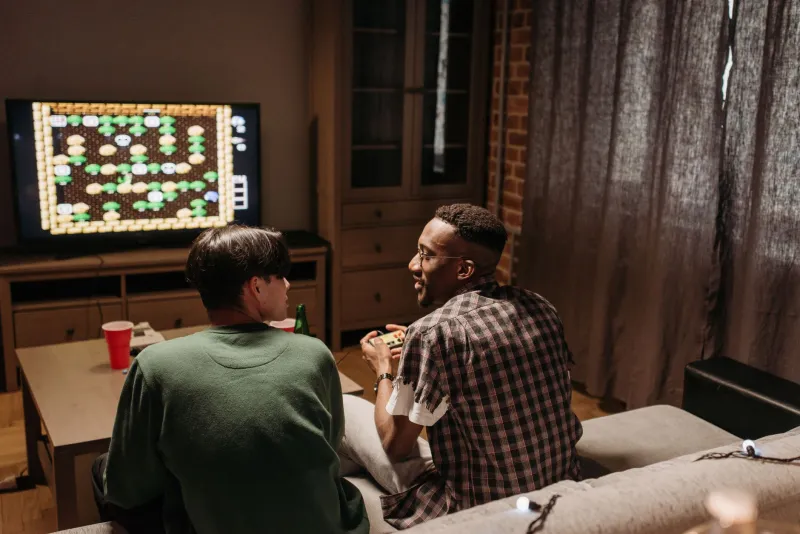
Photo: Océanos y dados, CC0, via Wikimedia Commons
At a flea market in Ohio, a guy named Denny can look at a stranger, look at a boxed console, and know within ten seconds whether the deal is safe. He reads hands, eye contact, how the person holds the box, whether they flinch at the price. Forty years of Saturdays taught him a language nobody wrote down.
Now picture the same transaction, except Denny is a 24-year-old in a Discord server, the other party is a username with an anime avatar, and the item is a factory-sealed Nintendo 64 worth four grand. No handshake. No eye contact. No table between them — just a screen.
And yet the deal goes through. Constantly. Because the internet did what it always does: it rebuilt Denny's instincts out of software.
The Role Color Is the New Handshake
Spend any time in the serious retro trading servers — the ones with age verification and rules longer than a car lease — and you'll notice that not all usernames are equal. Some people have a little colored tag next to their name: Verified Trader, Level 3 Collector, or in one server we looked at, a badge that literally reads 64forsuu Certified as a joke that stuck.
These aren't vanity labels. They're the load-bearing architecture of the whole economy.
Verification usually works like this: you post your collection — with a handwritten username on a dated note — a mod cross-references your transaction history, and if you check out, you get the role. The colored tag says, in effect, this person has completed enough real deals that the community is willing to underwrite the next one.
It's the digital version of Denny watching how you hold the box. Except instead of instinct, it's an audit trail.
Reputation, but Make It a Spreadsheet
The older forums had iTrader scores and feedback threads — clunky, gameable, mostly ignored. The new generation of communities got more paranoid, and honestly, more clever.
Some servers now maintain what regulars casually call heatmaps: internal spreadsheets tracking every completed trade, every delayed shipment, every "package arrived crushed" dispute, color-coded by severity. Trade with someone in the green zone and you're fine. Trade with someone in the yellow and you'd better demand a video of the packaging. Red means mods won't even mediate your dispute — you were warned.
One server admin we spoke to described it as "credit scores, but for people who own too many loose cartridges." The comparison is more accurate than it sounds. Like credit, the system works because everyone has skin in it: your heatmap score is the collateral you put up against your own behavior.
The genius part is what it replaced. In-person markets ran on consequence — rip off Denny and the whole flea market knows by Sunday. Online, consequence evaporates. The heatmap is an attempt to manufacture it from nothing.
The Emoji Protocol
Then there's the choreography. Every subculture develops ritual, and trading servers have developed one that outsiders would find completely illegible.
A typical high-value deal runs something like this: buyer posts a claim emoji to lock the item. Seller responds with a timestamped photo of the item next to that day's date. Buyer confirms with a checkmark. Payment goes out, a receipt screenshot lands in the thread, and only then does anyone type an actual sentence. The whole negotiation might contain fewer than twenty words.
It reads like superstition. It's actually compression — the same instinct that turned cheat codes into scripture and price stickers into ciphers. When trust is scarce, communities build shorthand, and the shorthand becomes the culture.
What Happens When It Breaks
Of course, the system has failure modes the flea market never did. Scammers buy and sell small items for months to build a spotless heatmap, then cash out with one four-figure sale and vanish — the long con, industrialized. Screenshots get faked. Verified roles get inherited when someone sells an account. And unlike Denny, a mod in Nebraska can't read a stranger's face when something feels off.
The communities know this. The best ones respond the way institutions always have: escrow services run by trusted members, mandatory video proof above certain dollar thresholds, insurance pools funded by server donation drives. Slowly, informally, they're inventing a regulatory body with no legal existence whatsoever.
The Old Instincts, Rebuilt
Here's what stuck with us after weeks of lurking in these servers: nothing here is actually new. Verified roles are guild marks. Heatmaps are the neighborhood watch. The emoji protocol is a handshake with the handshake removed.
The flea market pros never wrote their instincts down because they didn't have to — they'd be dead or retired before it mattered. The Discord generation doesn't have that luxury. They're trading four-thousand-dollar objects with people they'll never smell, never hear, never sit across a folding table from. So they wrote the instincts down, turned them into badges and colors and checkmarks, and made the language mandatory.
Denny would probably find it ridiculous. He'd also, if he looked closely, recognize every single rule.