The Cheat Code Died of Convenience: A Eulogy for Secrets We Used to Earn

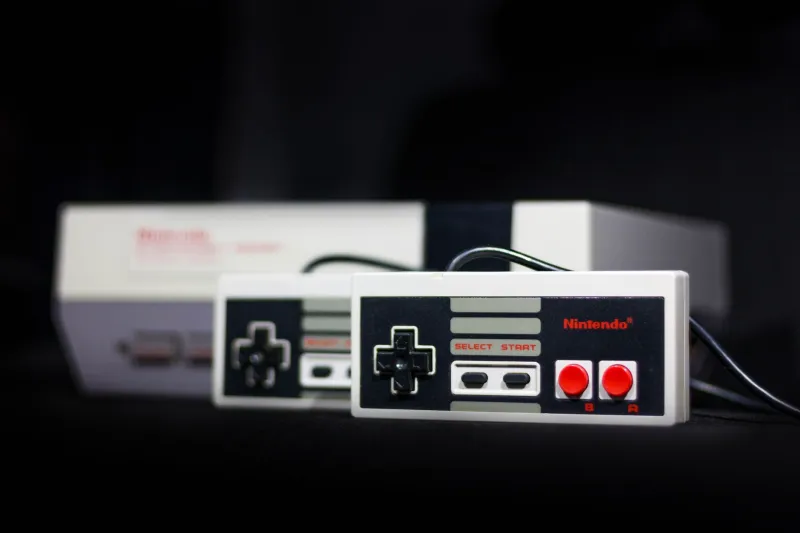
Photo: Matthew Paul Argall, CC BY 2.0, via Wikimedia Commons
Somewhere in a landfill in Ohio, there's a sheet of wide-ruled notebook paper with the Konami Code written on it in blue ballpoint pen, surrounded by doodles of ninjas. Up, up, down, down, left, right, left, right, B, A. That paper was, at one point, worth more to me than my actual allowance. I'd trade a whole Lunchables for a code I didn't have.
That paper is gone. So is the entire economy it belonged to.
Secrets Used to Have a Supply Chain
Here's the thing people forget about cheat codes: they didn't come from the internet. They came from somewhere, and figuring out the somewhere was half the magic. Your cousin saw it in a magazine at the grocery store checkout — EGM, GamePro, whatever was by the gum. A kid two grades up learned it at his dad's office. The 1-900 number on the screen at the end of a NES game charged your parents $1.99 a minute to have a stranger read you hints, which is a sentence that sounds insane in 2024 and was completely normal in 1990.
Information had friction. It had weight. It traveled mouth to mouth like a rumor, mutating along the way — which is how an entire generation of American children grew up believing that pressing A and B simultaneously while blowing into a cartridge did something, anything, please God let it do something.
And when you finally had a real code? You were rich. You were the guy on the bus with the Mortal Kombat blood code — ABACABB — and for about two weeks, you were the most popular child in your zip code. Kids came to you. That's a social position you cannot buy anymore, because nobody needs a guy when they've got a wiki.
The Wiki Killed the Playground Whisper
I want to be clear: I'm not anti-wiki. The people who maintain those things are doing the Lord's work, documenting frame data and drop rates with the devotion of medieval monks. But something structurally changed when secrets became searchable.
A secret on a wiki isn't a secret. It's content. It has no provenance, no story, no person attached to it. You didn't get the code from your friend's older brother who got it from a kid who moved away — you got it from a page that also has a banner ad for a mobile game. The knowledge is identical. The experience is not even in the same zip code.
Cloud saves finished the job. Half the reason codes existed was because games were brutal and unforgiving — lose your lives, start over, pray. Password screens were a mercy. A grid of characters that stood in for your progress, which you copied down like a court stenographer, and woe unto you if you confused a lowercase l with a capital I. We didn't just memorize codes; we developed a whole literacy of transcribing things that looked like gibberish but meant your Saturday afternoon.
Now the game autosaves every ninety seconds and secrets are surfaced by the game itself, politely, in a quest log. Nothing is withheld. Nothing is earned.
What We Actually Lost
The nostalgic take is that we lost the codes. The realer take is we lost the circuit — the human network the codes traveled through.
Think about what a traded secret actually was: it was proof you talked to somebody. It required a friend, a cousin, a kid at a sleepover who knew something. The cheat code was an excuse for a social interaction, a handshake protocol for ten-year-olds. The playground rumor mill — the one that told you Mew was under the truck, that told you Sheng Long was real — wasn't misinformation. It was folklore. Folklore is wrong sometimes. That's fine. It's how you know it's alive.
A wiki entry can't be wrong in the same charming way. It can only be outdated, which is a bureaucratic problem, not a mythological one.
There's also the matter of the moment of discovery. When you found something in an old game — a hidden room, a weird glitch, a developer's name buried in the credits — you found it alone or with the person next to you on the couch, and then you carried that discovery out into the world like a lantern. Now, if you find something cool, ten thousand people found it eleven years ago, made a YouTube video about it, and the algorithm has already shown it to you twice before you even played the game.
Discovery has been pre-chewed for us.
Keep One Secret in Your Pocket
I'm not saying we go back. The 900-number industry should absolutely stay dead, and my parents deserve reparations for the minutes I burned on a Donkey Kong hint line.
But here's my modest proposal: the next time you're stuck on something, sit with it for a day before you search. Let the thing be unsolved for a minute. And if you've got a kid in your life playing something old, don't look the answer up for them — make them earn it, or better, be the person who gives them a secret, free of charge, like the kid on the bus once gave one to you.
Up, up, down, down. It was never really about the code. It was about who told you.