Skeletons in the Menu Bar: The Dead Tech Still Running Your Screens
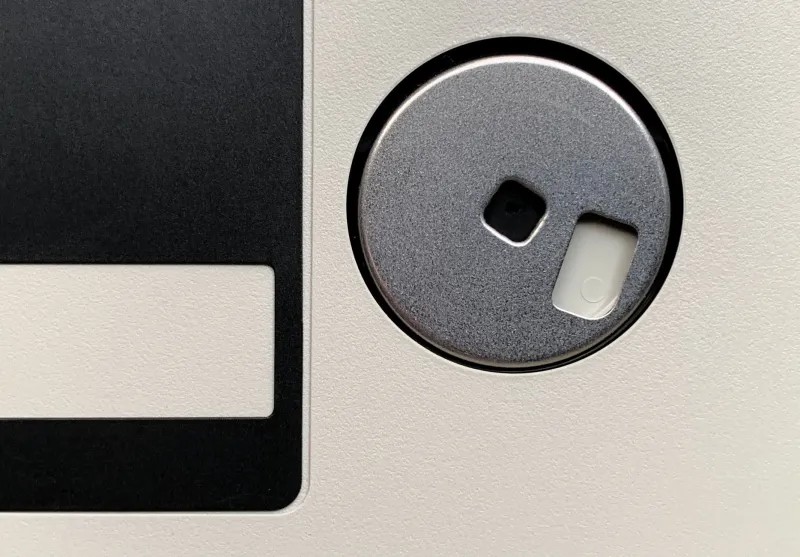
Look at the top of your browser right now. There's a decent chance you'll find a floppy disk somewhere in the interface — maybe as a save icon, maybe in an autosave notification. You haven't touched an actual floppy disk in twenty years. Your little cousin has probably never seen one outside of a meme. And yet the little plastic rectangle endures, quietly doing its job in every app from Photoshop to your banking portal.
This is the weird zombie economy of interface design: objects that died decades ago but whose meanings are still alive, gainfully employed, showing up to work every day on your screen. Once you start noticing them, you can't stop. So let's dig up a few of these fossils and figure out why they refuse to stay buried.
The Floppy Disk: A Museum Piece With a Full-Time Job
The floppy disk died as a consumer product around 2011, when Sony stopped manufacturing them. But as a symbol, it's arguably more recognizable today than it was in 1995 — because now it doesn't have to compete with the real thing.
That's the trick. The save icon works precisely because it's obsolete. When floppies were common, "save to disk" was one option among many — print, network, tape backup. Now that the floppy means nothing literal, it means one thing only: commit this work. The symbol got sharper as the object got deader.
There's a lesson buried in there about how symbols work in general. Meaning isn't preserved by the object; it's preserved by repeated use. The floppy survives because every app that ever shipped a save function copied the icon from the app before it, like a genetic trait passed down the software family tree. Nobody at Figma or Google HQ is sentimentally attached to magnetic storage. The icon just won the evolutionary lottery.
The Handset Emoji: Calling From a Phone That Never Hung Up
Pull up the emoji keyboard and find the phone symbol. It's a classic handset — the curved earpiece-and-mouthpiece unit you'd cradle against your face on a landline. Now ask yourself: when's the last time you held one? For most Americans under 35, the honest answer is at a museum, or in a sitcom rerun.
The handset survived because a phone call still has a recognizable shape in our imagination, even if the physical form is gone. A rectangle showing a screen would just look like... every other rectangle. The handset is the last universally readable shorthand for "voice call," which is why it's still plastered across every video call button and contact screen on Earth.
And the hang-up gesture? We still say it. You "hang up" on a scammer, "stay on the line" with customer service, and get "put on hold" — a phrase that once meant your call was literally resting on a plastic hook on the side of the phone. The hook is gone. The language didn't get the memo.
Dialing Numbers on a Phone With No Dial
Here's one that goes deeper than icons, all the way into your muscle memory: you dial phone numbers. On a device that has never had a dial. Your grandparents' rotary phone took actual seconds to return to position after each digit — which is why nine was the worst number to have in your phone number and why "dialing" a 555-0100 took longer than dialing 555-1111.
The rotary dial itself is a fossil of a fossil. It only worked because phone companies needed a way to send numbers as electrical pulses, and a rotating switch was the cheapest solution. When touch-tone buttons arrived in the 1960s, the dial disappeared almost overnight — but the verb stuck around the way "carriage return" lingered in word processors and "filming" persists now that almost nobody films anything on film.
The Battery Symbol Is Lying to You
Ever notice the battery icon on your laptop looks like a little cylinder with a cap? Real lithium-ion cells haven't looked like that in ages — modern batteries are flat, sealed pouches. The icon is a diagram of a battery from roughly 1800, when Alessandro Volta stacked copper and zinc discs in a column. The "cap" on the battery icon is the terminal that stuck out of old cylindrical cells.
So your screen is showing you a 200-year-old visualization of chemistry to communicate something Volta couldn't have imagined. And it works instantly, because a simple rounded rectangle with a charge level is the most legible battery representation ever devised. Modernity keeps redrawing it and modernity keeps coming back to the same shape.
Why Meaning Outlives Its Object
There's a pattern across all of these: the icon outlasts the artifact whenever the concept is stickier than the thing. Nobody needs to remember what a floppy disk is to understand "save." Nobody needs to have hung up a receiver to know what ending a call feels like. The symbol carries the concept forward, and the concept doesn't care that its original vehicle got scrapped.
Designers have tried to kill these fossils. Every few years, someone proposes replacing the save icon with a down arrow or a cloud, and every few years, users rebel, because the replacement requires a half-second of translation while the floppy requires none. The fossil isn't nostalgia — it's efficiency. It's the shortest path between intention and understanding, and it just happens to be paved with dead technology.
So next time you tap a handset to call your mom, or hit a floppy to save a doc, take a second. You're not using an icon. You're running legacy code — a small piece of cultural software written decades ago, still executing flawlessly on hardware its original designers couldn't have dreamed of.
The object died. The meaning got promoted.