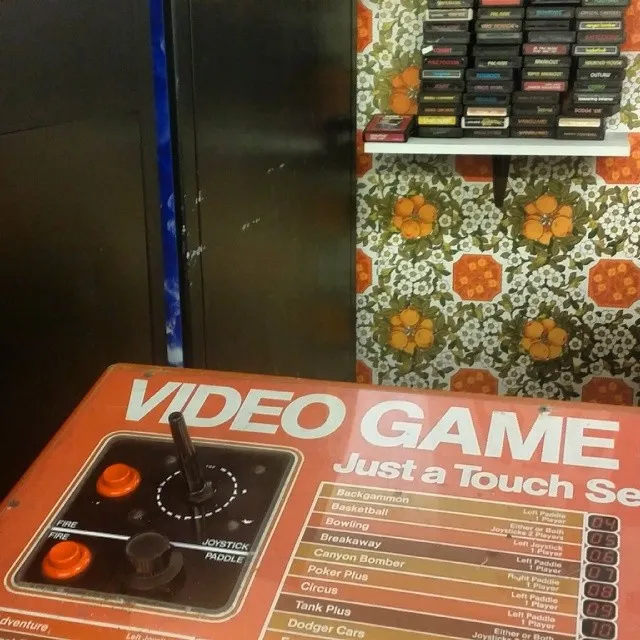
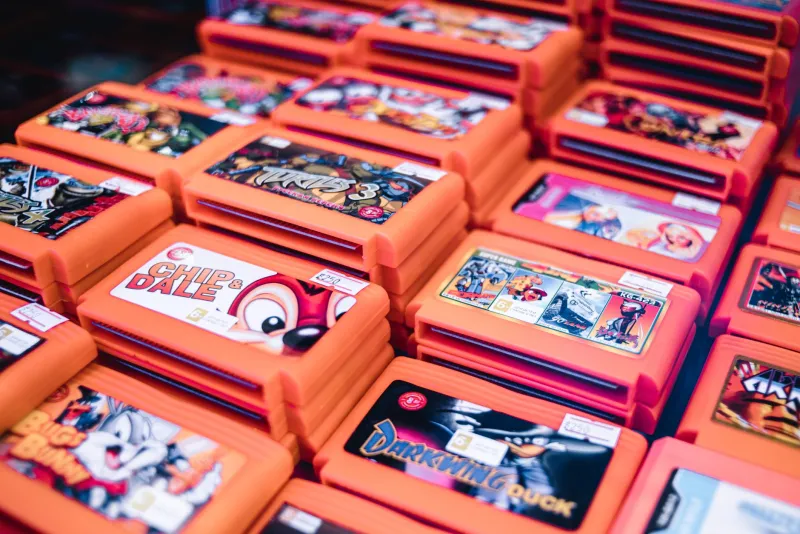
The Dollar Bin Oracle: What a $2.99 Price Tag Knows About You
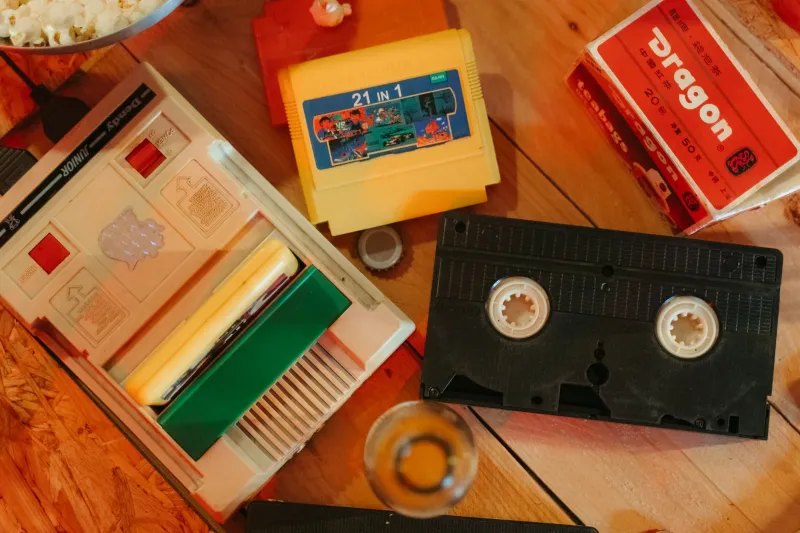
There's a moment at every estate sale in America when the past gets sorted into tiers. The good jewelry goes on the dining room table. The tools go in the garage. And the consoles — well, the consoles go wherever the volunteers decided they belonged, which turns out to be the most brutal market analysis in the country.
At a sale in a Dayton suburb last spring, I watched a boxed Atari 2600 sit in a cardboard flat marked "$5 ALL" while, four feet away, a loose Nintendo 64 with no cables was priced at $40. Neither seller had done research. Neither had to. The market had already decided for them, decades earlier, which machine deserved to be remembered.
That decision is what this article is about.
The Invisible Generation
Every console collector has a mental map of the dollar bin. It's not the failures that end up there — the failures get remembered, ironically, because failure is a story. The Virtual Boy is a punchline, and punchlines appreciate. The Atari Jaguar is a cautionary tale, and cautionary tales get documentaries.
What ends up in the bin is something stranger: the forgotten successes.
Walk into any Goodwill in the Midwest and you'll find them. The RCA Studio II. The ColecoVision adapter cartridges. A hundred thousand VCS knockoffs sold at Sears under names nobody wrote down. These weren't flops — some sold millions of units. They just never got a mythology. No mascot, no rivalry, no playground argument to carry them forward.
Nostalgia, it turns out, isn't about how much you enjoyed something. It's about whether you had language for it. A console that gave kids something to argue about at recess survived. A console that quietly worked did not.
Price Is a Story, Not a Number
Here's the pattern I kept seeing across a dozen states: the price of old hardware tracks almost perfectly with how narratable its death was.
The NES commands premiums because it died publicly — the crash of '83 is a story with a villain, a hero, and a resurrection. The Sega Dreamtrade... sorry, Dreamcast, gets glass-case treatment because its failure was tragic and noble, the martyrdom narrative collectors eat up. Meanwhile, machines that simply stopped — no drama, no final chapter — drift toward the $2.99 bin at a Salvation Army in Toledo.
An estate sale organizer in Georgia put it to me plainly: "People don't buy the console. They buy the argument they remember having about it."
The Estate Sale Economy
Estate sales are where this sorting ritual gets performed with the least self-awareness, which makes them the best place to observe it. The person pricing items usually has no gaming knowledge and is working from vibes, a quick eBay scroll, and the ambient cultural weight each object carries.
That ambient weight is wildly uneven. A yellowed Game Boy with a cracked screen reads as artifact — everyone recognizes it, so everyone assumes it's valuable. A pristine Intellivision in box reads as old electronics, which in most American households means the same category as a bread maker.
The result is a kind of accidental arbitrage. The people who know the difference — and there's a whole community of them, coordinating on Discord, hitting Saturday sales at 7 a.m. — are essentially mining the gap between cultural memory and market price.
What the Bin Remembers
Spend enough weekends doing this and you start to see the thrift store shelf as an archive. Not of technology — of attention.
The consoles in the dollar bin weren't worse. Many were technically ahead of their time. They're there because nobody built a story around them sturdy enough to survive the person who originally bought them. When that owner died or downsized, there was no mythology to catch the machine. It fell, gently, into a $1.99 bin next to the VHS tapes.
The neighbors that escaped — the ones behind glass, the ones with price checks and bidding wars — escaped because someone, somewhere, kept telling their story. A playground argument in 1992 became a collector's premium in 2024. Memory compounds like interest.
So the next time you see a sad stack of unnamed cartridges marked three for a dollar, understand what you're looking at. That's not junk. That's a story that ran out of tellers.
For now.