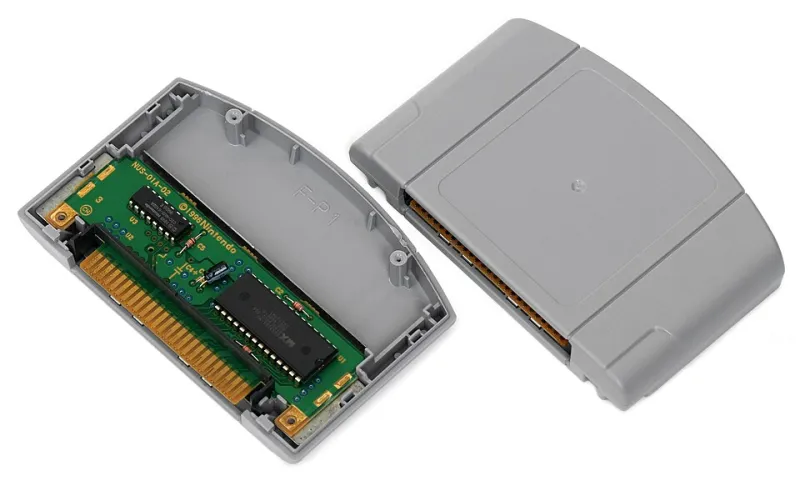
Plastic Gold Rush: Inside the $1.5 Million Mario Cartridge Economy
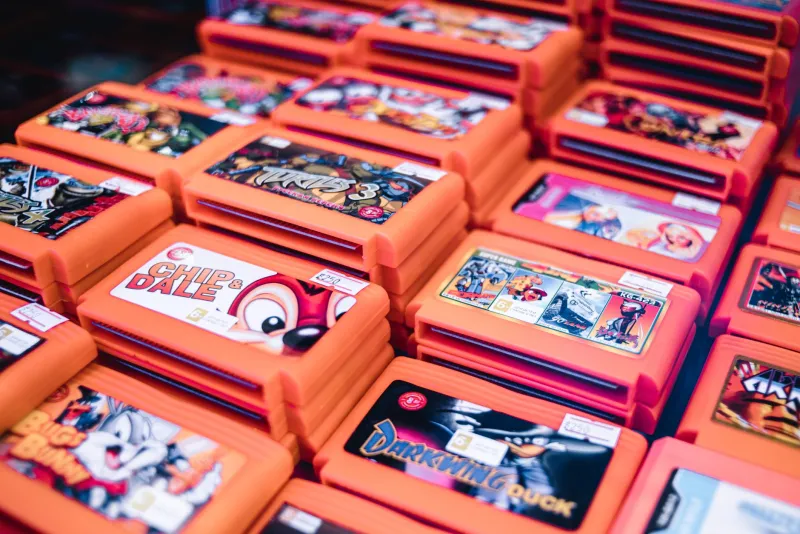
In July 2021, a sealed copy of Super Mario 64 sold at auction for $1.56 million. Read that again. Not a painting. Not a rookie card. A mass-produced piece of injection-molded plastic that originally retailed at a Toys R Us for $59.99, sitting in shrink wrap for a quarter century.
If you've had one of those 'vintage gaming market is insane' clips pop up on your feed lately, you already know the vibes. But the clips don't really explain what's going on. So let's decode it.
From Toy Aisle to Auction House
The N64 cartridge market didn't always look like this. For decades, retro games were, well, games — stuff you bought at a flea market for ten bucks because you wanted to actually play them. The collector's market existed, but it was a backroom economy of forum trades and eBay sniping.
Then two things happened.
First, the generation that grew up on the N64 hit its prime earning years. Millennials with disposable income and a nostalgia itch are a predictable force — just look at what happened to Pokémon cards and Beanie Babies before them. Suddenly there was real money chasing finite supply.
Second, and this is the part most people miss: the grading industry showed up.
The Graders Made It a Stock Market
Companies like Wata Games (and their trading-card ancestors, PSA) essentially invented a way to turn a toy into an asset class. They take a sealed game, inspect it under magnification, assign a grade on a 10-point scale, seal it in a tamper-proof plastic case, and — crucially — publish the sales history.
Sound familiar? It's basically the S&P 500 for Mario. A 9.6 A++ sealed Mario 64 isn't a game anymore; it's a ticker symbol. And once you have grades, you have comps, and once you have comps, you have speculation. People weren't buying cartridges to play. They were buying cartridges the way their dads bought Beanie Babies in '98 — except this time with actual market infrastructure behind it.
The auction houses leaned in hard. Heritage and RR Auction started running dedicated video game lots with glossy catalogs and pre-sale estimates that read like real estate listings. CNBC ran segments. Collectors appeared on morning shows. The feedback loop was complete: prices went up because prices were going up.
Who's Actually Buying?
Here's where it gets murky, and honestly kind of interesting.
The buyers fall into roughly three camps. There are the true believers — lifelong collectors with the disposable income to chase a white whale, for whom a million-dollar Mario is the endgame of a forty-year hobby. There are the investors, a newer breed, who treat sealed games like alternative assets: uncorrelated with stocks, physically scarce, culturally beloved. And then there are the speculators, who saw a graph going up and to the right and wanted in.
That last group is the reason things got weird. When Heritage's video game sales jumped from a few million dollars annually to north of $40 million in a couple of years, a lot of that wasn't passion — it was FOMO with a credit line.
Bubble or New Baseball Cards?
So is the whole thing a house of cards? The honest answer: the froth has already come off, and that's probably healthy.
After the 2021 peak, prices for mid-tier graded games cooled significantly. The copy-and-paste speculators thinned out. But the top of the market — genuinely rare, culturally significant pieces — has held up much better, for the same reason a 1909 Honus Wagner card still commands seven figures. There's only one of it, and the people who want it don't need to sell.
The baseball card comparison is actually the most useful lens here. Cards went through the exact same cycle: boom in the late '80s, brutal crash in the '90s, then a slow decades-long recovery where the truly rare material ended up worth more than ever while the mass-produced stuff became basically worthless. Most sealed N64 games were produced in the millions. History suggests most of them will not make you rich.
The Part Nobody Talks About
There's an irony at the heart of all this that fits this site a little too well: the most valuable cartridges are the ones that will never be played. A sealed Mario 64 is a locked box — a game reduced to pure artifact, its actual purpose erased by its own value.
Meanwhile, the real preservation work happens elsewhere. Speedrunners keeping old games alive, hobbyists rebuilding consoles, emulation archivists digitizing everything before the capacitors rot. The market prices the wrapper; the community preserves the soul.
So if you're watching those viral auction clips and feeling like you missed the boat — relax. You didn't miss the boat. The boat was always a shrink-wrapped box that somebody decided was a yacht. The games themselves? Those are still thirty bucks at your local retro shop, and unlike the graded ones, you can actually press start.