Grid Locked: Why Your Brain Can't Quit the 8x8
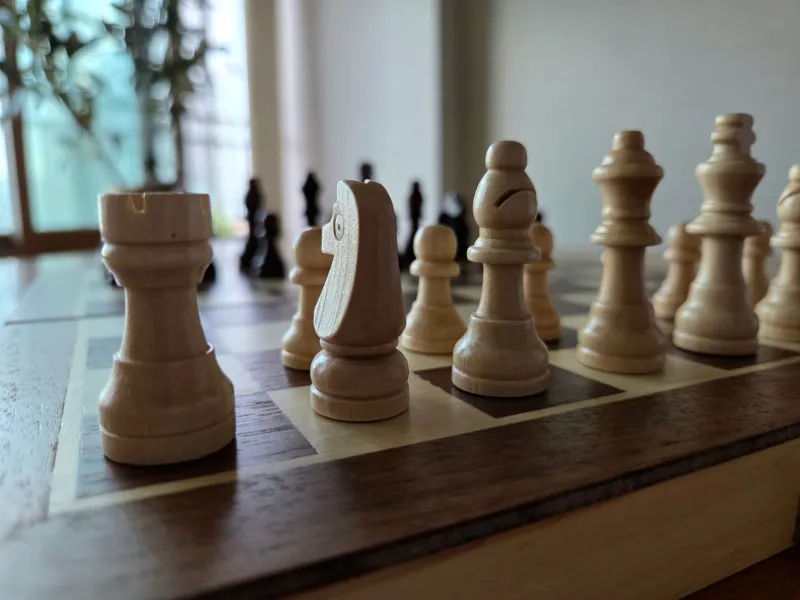
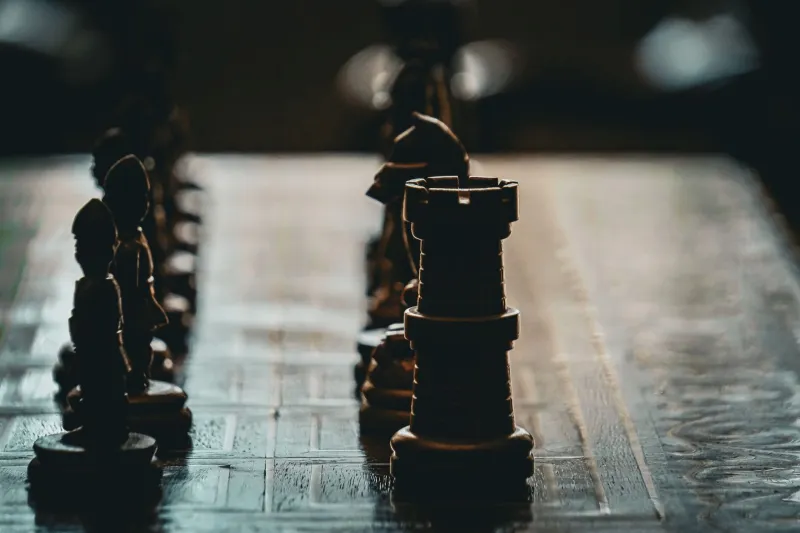
There's a decent chance the most played object in American history isn't a console, a deck of cards, or a phone. It's a board with 64 squares on it.
Chess. Checkers. Chess variants. Drafts of chess. That beat-up cardboard board in your grandma's closet that served both games depending on who was visiting. Eight by eight. Sixty-four little squares, and somehow that layout has outlived every empire, every console war, every app store gold rush.
We named this site 64ForSuu partly as a nod to that grid — the idea that beneath all the noise, most games are systems waiting to be decoded. But the deeper question is why the grid won. Why do our brains keep coming back to a fixed, readable field of play?
The Board Is the Argument
An 8x8 board does something sneaky: it makes the rules visible. Every square is addressable. Every piece has a neighborhood. When you lose at checkers, you don't feel robbed — you can literally see the move you missed, sitting there on square 27 like a receipt.
Compare that to modern chaos. Battle royales with 99 strangers. Live-service games that change their economies every patch. There's comfort in a system that stays put. The grid doesn't patch. The grid doesn't nerf your favorite piece. It just waits.
Psychologists have a boring name for part of this — "pattern recognition reward" — but the lived version is simpler: it feels good to be right, and a closed system lets you be right on purpose. You're not lucky. You solved it.
From Pawns to Wordle Streaks
That same wiring didn't go anywhere. It just moved houses.
Look at what Americans actually play now. Wordle is a 5x6 grid — a tiny cousin of the 8x8 — and the entire culture around it is about the streak, the shareable result, the yellow-and-green grammar everyone learned in a week. Fantasy sports? That's a spreadsheet wearing a jersey: a closed rule system where the reward is proving your pattern read was better than your brother-in-law's.
Solitaire deserves its own paragraph here, honestly. It shipped with Windows in 1990 as a way to teach people how to drag and drop, and it quietly became the most-played game on Earth. No opponent. No story. Just a rule system and the promise that if you read the deal correctly, order emerges from chaos. That's the grid mentality with cards instead of squares.
And roguelikes — the genre du jour, from Slay the Spire to whatever your group chat is obsessed with this month — are basically chess's chaotic grandchildren. Fixed rules, endless permutations, and a death screen that whispers you'll read the pattern better next time.
Decoding as the Dominant Play
Here's the argument worth sitting with: for most of the 20th century, play meant competition or spectacle. You played to beat someone, or you watched someone else be great.
Today, the dominant form of play in the US is decoding. We crack the Wordle. We reverse-engineer the meta. We read patch notes like scripture. We treat a fast food app's reward schedule like a puzzle to be optimized. Even the way we talk online — in-jokes, coded references, emoji signals — is pattern play. The game is the system. The fun is figuring it out.
The 8x8 board saw this coming. It's the original closed system that rewards obsession: learn the rules, read the patterns, feel the click when chaos resolves into order. Everything from speedrunners mapping a game's internal logic to your aunt's 400-day Duolingo streak runs on the same fuel.
Why It Won't Stop
There's an anxiety angle too, and it's worth naming. A grid is finite. Sixty-four squares, known pieces, clear rules. In a decade where the feed is infinite and the news cycle is a firehose, a bounded system is a little vacation for the brain. You can finish it. You can, at least in principle, master it.
That's why chess had a genuine pop culture moment in the last few years and why checkers never really dies in American diners and front porches. It's not nostalgia. It's architecture.
Sixty-four squares. That's all it takes. Everything else — the app, the algorithm, the streak counter — is just a new way of drawing the grid.