The $8 PS2 Guy: How to Spot the One Seller at the Sale Who Knows Something You Don't
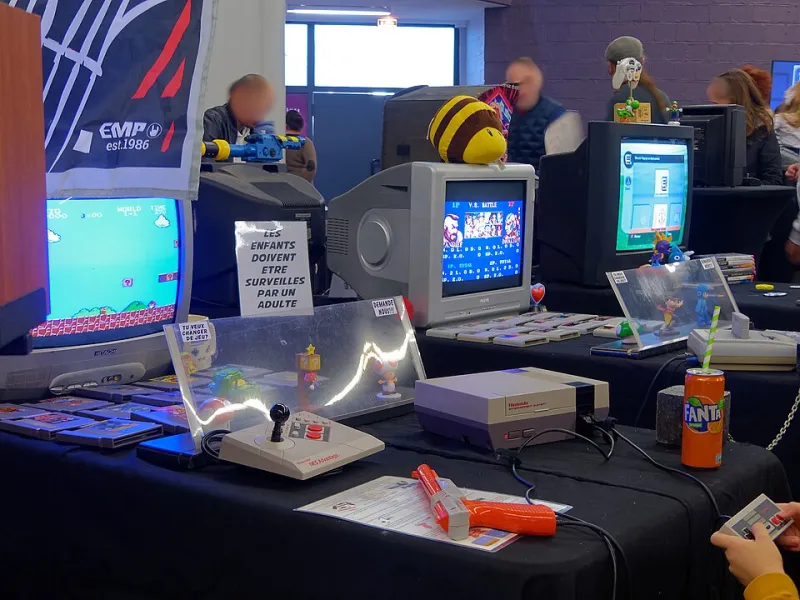
Photo: Thomas Bresson, CC BY 4.0, via Wikimedia Commons
There's a moment every garage sale veteran knows. You're working a Saturday route through some suburban cul-de-sac, you hit the third sale of the morning, and there it is: a stack of PlayStation 2 games marked at $8 a pop. Eight dollars. The sale two streets over had a whole milk crate of them at three bucks each. The sale after that was basically giving them away with the lawn mower.
Your first instinct is to write this person off. Overpriced. Delusional. Doesn't know what year it is.
Your second instinct — the one that separates people who find treasure from people who buy a fondue set and go home — should be to slow down and pay attention. Because the $8 PS2 guy isn't usually wrong. He's usually the most dangerous person at the sale.
The Outlier Is the Signal
Here's the counterintuitive truth of resale hunting: the average seller prices from vibes. They want stuff gone, they guess at a number, they'd rather have $40 in a shoebox than a garage full of boxes. The outlier seller prices from data.
That's the whole game. When one seller's tags run two or three times higher than everyone else's in a five-mile radius, it's rarely greed. It's usually the fingerprint of somebody who's done the research — checked sold listings, knows which titles are actually scarce, understands condition grading better than the person who owned the game for twenty years.
Resellers talk about this constantly. Ask around in the vintage game community and you'll hear the same story on repeat: the sale where everything looked expensive turned out to be the sale where one sealed copy of a cult RPG was sitting in a Rubbermaid bin, correctly priced at $150 while every other table in town would've let it go for a fiver.
The irrational price is often the most rational one on the block. It just looks wrong because you're comparing it to ignorance, not to the actual market.
Where the Crazy Math Comes From
So what's actually happening behind those tags? A few things, usually stacked on top of each other.
Sold listings, not asking prices. Casual sellers anchor to what things cost new, or what a friend said. Outlier sellers anchor to what things actually sold for — the completed listings, the auction archives, the last three transactions on a marketplace. That gap between "what people ask" and "what people pay" is where all the confusion lives.
Condition literacy. A loose cartridge and a complete-in-box copy of the same game can differ by a factor of ten. The seller who gently checks the back of a case, squints at the manual, and prices accordingly isn't being difficult. They're doing the work most people skip.
Local demand awareness. Some sellers know their market cold. In a college town, retro stuff moves fast and prices reflect it. In a retirement community, the same goods might sit for weeks — and the sharp seller prices for the online buyer, not the drive-by one.
Scarcity knowledge. Not all PS2 games are equal. Most are landfill. A handful are grails. The $8 tag on a random sports title is a bad sign. The $8 tag on a weird, low-print-run oddity from a mid-tier publisher? That's a person who knows their print histories.
A Field Guide to the Smartest Person at the Sale
Want to know if you're dealing with a delusional pricer or a quiet expert? Run this quick checklist before you walk away.
- The games are organized, not heaped. Sorting by system, alphabetizing, keeping cases with discs — that's curation, and curation means the seller looked things up.
- They ask what you're into. An expert seller triages. They'll steer the collector toward the good bin and the parent toward the cheap one. That's not snobbery; it's inventory management.
- The weird stuff is priced, the common stuff is cheap. If Madden 2004 is a dollar and some obscure Japan-only import is $25, congratulations — you found a real one.
- They don't haggle much. Counterintuitive, but a firm price on a correctly-valued item is a confidence tell. Desperation haggling happens at the vibe-priced tables.
- They know the story. "That one's from my brother's collection, he kept everything minted." Provenance plus a high price is usually a fair price.
The reverse matters too. If the expensive stuff is expensive because it's old — not rare, not sealed, just dusty — you're dealing with the Antiques Roadshow Effect, not expertise. Age alone prices nothing.
Why This Matters More Than It Used To
The gap between the informed and the uninformed seller has never been wider. A decade ago, the price gap between a smart tag and a lazy tag might've been 2x. Now, with retro game values having gone full speculative-asset over the last several years — graded copies, sealed auctions, market indexes — the informed seller is operating in a completely different universe. That same gap works in reverse, by the way. The uninformed seller is now potentially underselling by hundreds of dollars. Both directions of the gap are your opportunity.
So next Saturday, when you hit the sale with the "offensive" prices, don't roll your eyes and peel out. Linger. Ask questions. Look at what they priced high versus what they priced low. The pattern is the tell.
Because in the garage sale economy, the person charging eight bucks for a PS2 game isn't the one who doesn't get it.
They're the only one who does.