Fifty-Nine Blocks: The Agonizing Math of Deciding What Your Childhood Was Worth
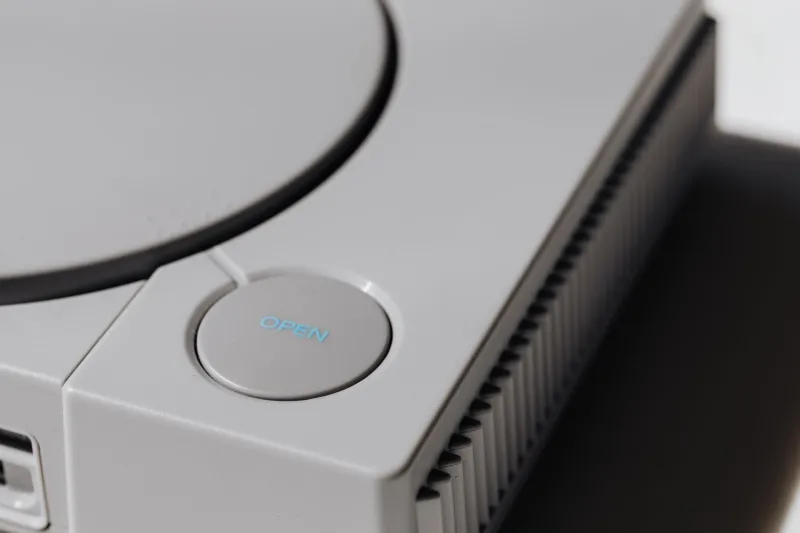
There's a specific kind of silence that happened in American living rooms around 1999. It's the silence of a kid staring at a memory card management screen, doing arithmetic that no math teacher ever assigned.
You had 15 blocks of free space. The new game you just rented from Hollywood Video wanted 3. Your little brother's NFL GameDay season? 12 blocks, untouched since October. Somebody was about to lose everything.
Storage Was a Budget, Not a Service
The modern digital life runs on a comfortable fiction: that everything can be kept. Photos auto-upload. Saves sync. Your phone will happily hoard 40,000 screenshots of a meme you looked at once.
The memory card rejected that fiction completely. A standard PlayStation memory card held exactly 15 blocks — 128 kilobytes, total, which is less than a single photo taken on any phone made in the last decade. Some games were polite, asking for one block. Others, like the original Gran Turismo, demanded several. And a handful — looking at you, Ridge Racer Type 4 ghost data — treated storage like it cost the developer money, because sometimes it did.
So kids became curators. Forced ones. You learned block costs the way you'd later learn credit limits: through pain.
The Triage Screen
Every PlayStation owner remembers the management screen. Rows of save icons, each one a little spinning cube, each one a decision. Delete the 40-hour Final Fantasy VIII file because you're never actually going back for the perfect junction setup? Keep the Tony Hawk career where you finally landed the 900?
There was no "just in case." There was no archive. There was only what fit and what mattered.
And here's the thing nobody appreciated at the time: that constraint was doing something to us. Psychologists who study digital hoarding talk about how unlimited storage creates anxiety precisely because nothing ever has to be let go. The memory card was the opposite — a forcing function. It taught an entire generation that digital belongings could be weighed, not just accumulated.
Ask anyone who grew up in that era about deleting a sibling's save file and watch their face. That's not a storage anecdote. That's a moral injury.
The Cards That Never Got Wiped
Marcus Delgado, a collector in Ohio who runs a retro booth at the Columbus flea market circuit, keeps about two dozen memory cards in a small plastic case he does not sell. Ever.
"Half of them I bought at estate sales, still full," he says. "You pop one into a console and there's a stranger's entire childhood on there. A SmackDown! season mode that ran three years. A Crash Bandicoot file with every gem. Somebody chose to keep that, over and over, every time the card got full."
That's the detail that gets people: a full memory card isn't a snapshot. It's a log of repeated decisions. Every save on there survived dozens of triage screens. Whoever owned it kept choosing it.
Delgado describes one card he found at a garage sale in Dayton with a strip of masking tape labeled "DAD — DO NOT ERASE." It contains a single Tiger Woods 99 career. "That's a whole family dynamic in 15 blocks," he laughs. "You can't tell me the cloud gives you that."
What We Lost When Storage Stopped Being Scarce
Nobody's arguing for the return of 128KB. Cloud saves are an unambiguous good, and losing a 90-hour Elden Ring run to a corrupted card is a trauma no one should relive.
But there's a quiet flattening that happened when saving became invisible. When everything is kept, nothing is kept — nothing gets the deliberate, block-by-block commitment of "this one stays." The memory card generation grew up understanding that digital things could be precious precisely because they could be lost. Kids today, arguably, are still waiting for that lesson, and it's arriving the hard way, through subscription services quietly delisting games they "purchased."
The collectors who still keep working memory cards aren't nostalgic for the inconvenience. They're nostalgic for the clarity — the moment when the screen asked, in its cold block-count language, what actually mattered.
You had 59 blocks. You had to choose.
Turns out, that was the game.
Got a memory card you never wiped? The 64ForSuu inbox is open. We know you kept it.